

What If Your Child Isn't Misbehaving... But Communicating?

How the Brain Expresses Stress, Fear, and Emotional Overload and How You Can Help Your Child Feel Safe, Confident, and Understood
Every parent has experienced a moment when they look at their child and quietly wonder:
"What is happening? This isn't like them."
Maybe your child suddenly refuses to go to school.
Maybe homework has become a nightly struggle.
Maybe your once-outgoing child has become withdrawn, anxious, or easily frustrated.
Perhaps your teenager insists, "I'm fine," yet everything in your heart tells you something is wrong.
In those moments, it is natural to focus on the behavior we can see. We ask ourselves:

"How do I stop the tantrums?"
"Why won't my child listen?"
"What am I doing wrong?"
These are honest questions asked by loving parents.
But what if there is another question one that opens the door to understanding rather than frustration?
What if your child isn't simply misbehaving... but communicating?
Children do not always have the words to explain what they are feeling. Their brains are still developing, and many emotions are too big, too confusing, or too overwhelming to put into language.
Instead, they communicate through behavior.
Sometimes that behavior looks like anger.
Sometimes it looks like tears, silence, avoidance, perfectionism, or refusing to go to school.
Sometimes it looks like a child who says, "I don't care," when what they really mean is, "I'm scared," "I'm embarrassed," or "I don't think I can do this."
When we begin to look beyond the behavior, we often discover a child who is not trying to be difficult.
They are trying to tell us something they don't yet know how to say. 1
What Years of Working with Children Have Taught Me
After more than 28 years as a Special Education teacher, over 20 years as a Clinical Hypnotherapist, and more than 25 years as a Martial Arts instructor for children and adults, I have learned something that has stayed with me throughout my career:

When we slow down and truly listen, we often discover a child who is not trying to be difficult but trying to communicate.
Throughout the years, I have worked with children of different ages, personalities, abilities, and life experiences. Some struggled with anxiety, others with fears, low self-confidence, anger, emotional overwhelm, learning challenges, or difficulty adjusting to life's changes.
Although every child was unique, I noticed something they all had in common:
Every child wanted to feel understood.
Children rarely wake up in the morning planning to have a difficult day or to make life harder for their parents or teachers. More often, they are doing the best they can with the emotional skills, experiences, and understanding they have at that moment.
One of the greatest lessons children have taught me is this:
Before we ask, "How do we change this behavior?" we should first ask, "What is this child trying to tell us?"
That simple shift in perspective changes everything.
Instead of seeing only the behavior, we begin to see the child behind the behavior.
Instead of reacting with frustration, we become curious.
And curiosity often becomes the first step toward healing.

This doesn't mean children and teens don't need guidance, structure, or healthy boundaries. They absolutely do. In fact, children thrive when they have both a loving connection and consistent expectations.
But before children can fully learn, grow, and respond differently, they need to feel emotionally safe enough to trust the adults who are guiding them.
That is where understanding begins.
And often, that is where healing begins too.
Children and Teens Don't Always Have the Words, So They Show Us

As adults, we have had years to develop language for our emotions. We can often say:
"I'm overwhelmed."
"I'm disappointed."
"I'm worried about tomorrow."
"I need a little time to think."
Children and some teens are still learning those skills.
Many simply don't have the words to explain what they are feeling, especially when those feelings are confusing, frightening, or overwhelming.
Instead, they communicate in the language they know best behavior.
A child who is afraid of failing may suddenly refuse to do homework.
A child who feels anxious may complain of frequent stomachaches before school.
A child who feels rejected may become angry over something that seems insignificant.
A teenager who says, "Leave me alone," may actually be wondering,
"Will you still be here when I'm ready to talk?"
When we only react to the behavior, we often miss the message underneath.
That doesn't mean every behavior should be accepted or ignored. Children still need healthy limits, guidance, and accountability. But when we pause long enough to understand what is driving the behavior, we are in a much better position to help.
Throughout my years working with children, I have learned that behavior is often like the tip of an iceberg.

What we see on the surface is only a small part of the story.
Beneath the surface may be fear, disappointment, embarrassment, loneliness, confusion, frustration, grief, or simply a child who doesn't yet know how to ask for help.
When parents begin looking beyond the behavior, something remarkable happens.
Instead of asking,
"How do I stop this?"
they begin asking,
"What does my child need from me right now?"
That one question has the power to change not only a child's behavior, but also the relationship between parent and child.
Before We Correct, We Connect
Children do not need perfect adults. They need caring adults who are willing to listen, learn, and reconnect.

When a child is struggling, our first instinct as adults is often to correct the behavior.
We want to teach the lesson.
We want to solve the problem.
We want our child to make better choices.
Those goals come from love.
But sometimes, before a child can learn from our guidance, they first need to feel connected to us.
Connection does not mean allowing every behavior or removing all boundaries.
Connection means creating a relationship where a child knows:
"I am loved even when I am struggling."
"I can make mistakes and still be worthy of support."
"The adults in my life want to understand me, not just correct me."
Throughout my years working with children and families, I have seen how powerful simple moments of connection can be.
Sometimes healing begins with something very simple:

A hug.
A gentle touch.
Sitting beside a child instead of standing over them.
Looking into their eyes and saying:
"I am here. Let's figure this out together."
Sometimes the words a child needs most are not complicated.
They may need to hear:
"I'm sorry. I could have handled that differently."
"Thank you for helping me understand what you were feeling."
"I love you, and we are going to work through this together."
A parent's apology does not take away their authority.
It teaches something incredibly important:
Relationships can have difficult moments, and relationships can be repaired.
Children do not need perfect adults.
They need caring adults who are willing to listen, learn, and reconnect.
And sometimes, that one moment of connection becomes the bridge that allows a child to finally hear the guidance we are trying to give.
Connection Is Built in Everyday Moments
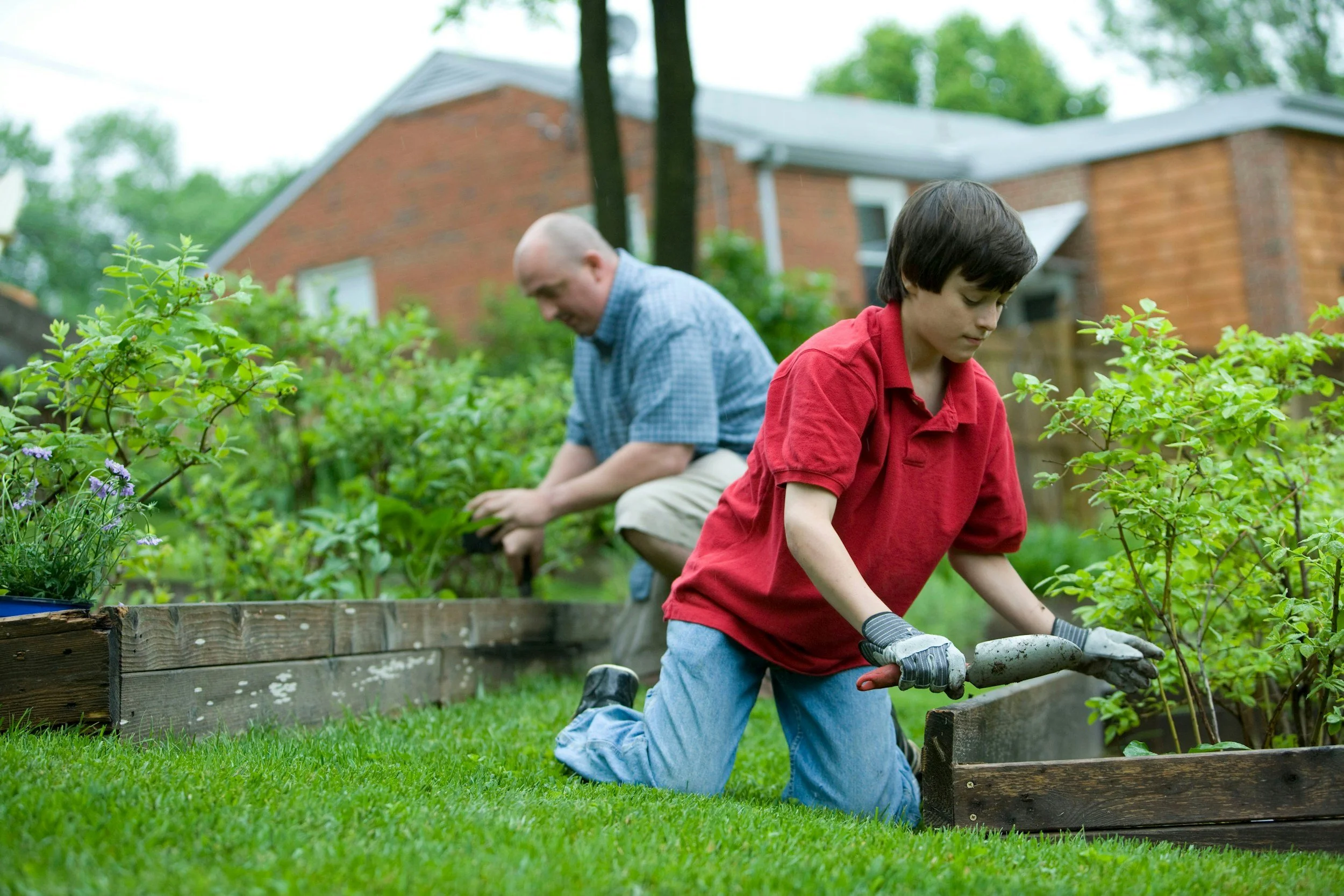
Strong relationships are not created only during serious conversations or difficult moments.
They are built in the small, ordinary moments that happen every day.
When families spend meaningful time together, children often develop a stronger sense of connection, trust, and belonging. These moments create opportunities for children to feel seen, valued, and important.
The activity itself is not the most important part.
The message behind it is:
"You matter to me."
Connection can happen while cooking a meal together, taking a walk, playing a game, working in the yard, driving in the car, sharing a hobby, reading a book, or simply sitting together without distractions.
These everyday moments create a safe space where children are more likely to share what is happening inside their world.
They may talk about a problem at school.
They may share a fear they have been carrying.

They may open up about something they did not know how to say before.
Children often do not begin difficult conversations because we ask the perfect question.
They begin because they feel safe enough to talk.
And this applies to every family situation.
A child does not need a perfect family structure to experience connection. What matters most is having caring, consistent adults who provide love, attention, encouragement, and a safe place to be heard.
A parent, grandparent, caregiver, mentor, or another trusted adult can become that important connection in a child's life.
throughout my years working with children, I have often seen how powerful simple moments can be.
A hug.
A kind word.
An apology.
A few minutes of genuine attention.
These things may seem small, but to a child they can communicate one of the most important messages they will ever receive:
"I matter. I am loved. I am not alone."
The Voice Children Carry Inside.

Children do not only listen to the words spoken around them.
Over time, they begin to develop an inner voice the way they talk to themselves when they face challenges, mistakes, or difficult emotions.
That inner voice can become a source of strength and confidence, or it can become a source of doubt and fear.
Imagine a child who repeatedly hears:
"You never listen."
"You always fail."
"Why can't you do this?"
Many times, these words are spoken during moments of frustration, stress, or exhaustion. Most parents are not trying to hurt their children. They are often repeating patterns they experienced themselves or reacting with the limited tools they have in that moment.
But children may not hear the frustration behind the words.
They may hear a message about who they are.
Over time, a child may begin to think:
"Maybe I am not good enough."
"Maybe I can't do this."
"Maybe I always fail."
The beautiful news is that the inner voice can change.
Children can learn new ways to speak to themselves:

"I can try again."
"Mistakes help me learn."
"I can handle difficult moments."
"I have strengths."
This is not about pretending everything is easy.
It is about helping children develop a more supportive relationship with themselves.
I remember working with a teenager whose mother came to me very concerned about his struggles with math. He was a sophomore in high school and was performing at the lowest level in his class. His family felt that he urgently needed help.
When I spoke with him privately, he shared something that helped explain what was happening.
He told me that when he sat down to do homework, he often heard his mother say:
"I hope you apply yourself tonight, because I don't want it to be the same as always failing, failing, failing."
His mother was trying to motivate him.
But what he was experiencing was a message of failure before he even started.
The pressure and fear affected his confidence, and learning became much more difficult.
We worked with the family on changing the emotional environment around learning. I encouraged his mother to offer something different—not more pressure, but connection and belief.
She told her son:
"I am sorry. I know I hurt you. I realize I repeated some of the ways I was raised, but I want you to know that I love you. I believe in your intelligence and your ability. I know you can learn and understand math, history, and anything you put your mind to. Please forgive me."
Something shifted.
His ability had not disappeared.
His intelligence had not changed.
But the story he carried about himself began to change.
The following semester, he entered a calculus class.
Later, he told me:
"I never thought math was natural to me."
Sometimes the greatest barrier between a child and their potential is not ability.
Sometimes it is the belief they have learned about themselves.
And sometimes, a loving conversation can help a child discover what was there all along.
When the Brain Feels Overwhelmed: Why Some Children & Teens React Before They Can Think

Have you ever seen your teen become so upset that it seems impossible to reach them?
Maybe they cry, yell, shut down, run away, refuse to participate, or say things they later regret.
Many parents have experienced moments when they think:
"Why won't my child just calm down?"
The answer often begins with understanding how the brain responds during stress.
The brain is designed to protect us. When a child feels threatened, overwhelmed, embarrassed, afraid, or emotionally flooded, the brain may shift into a protective mode.
In those moments, the child is not always choosing their reaction.
Their emotional system is responding faster than their thinking system can catch up.
This is why a child may know the rules but still struggle to follow them during an intense emotional moment.
It is also why trying to teach a lesson during the peak of an emotional storm often does not work well.
Before children can learn, problem-solve, or make better choices, they often need help returning to a calmer state.
This is where emotional safety becomes so important.

A calm voice.
A supportive presence.
A reminder that they are not alone.
These experiences help children learn:
"I can feel difficult emotions and still be okay."
"I can calm myself."
"I can handle challenges."
Over time, repeated experiences of safety and support help children develop stronger emotional skills.
The goal is not to eliminate every difficult emotion.
Fear, frustration, disappointment, and mistakes are part of being human.
The goal is to help children develop the ability to experience those emotions without being controlled by them.
This is one reason relaxation and focused attention can be so valuable in helping children create new patterns of thinking and responding.
How Hypnotherapy Helps Children Create New Paths

When parents first hear the word "hypnotherapy," they often have questions.
"Is my child asleep?"
"Will they lose control?"
"Can someone make them do something they don't want to do?"
These are understandable questions.
The truth is that therapeutic hypnosis is not about losing control. It is about developing a focused state of attention and deep relaxation where the mind can become more open to learning, practicing, and creating new possibilities.
Children naturally experience these states every day.
Have you ever watched a child become completely absorbed in a story, a game, drawing, building something, or using their imagination?
They are focused.
They are engaged.
They are temporarily less distracted by everything around them.
Hypnotherapy uses this natural ability of the mind in a structured and supportive way.
During hypnotherapy, children are not forced to abandon who they are or pretend their struggles do not exist.
Instead, they are gently guided to explore different ways of responding.
Imagine a child walking on a familiar path.
That path may represent an old pattern:
"When I feel nervous, I panic."
"When something is difficult, I give up."
"When I make a mistake, I believe I failed."
Hypnotherapy helps the child practice creating a different path:
"I can breathe and calm myself."
"I can try again."
"I can handle difficult moments."
"I have strengths I can use."
The child is not losing control.
They are learning more control over their own thoughts, emotions, and responses.
During deep relaxation, the brain is able to practice new experiences in a safe environment.
Just as athletes mentally rehearse a skill before performing it, children can practice confidence, calmness, focus, and emotional regulation.
The goal of hypnotherapy is not to change a child's personality.
The goal is to help children access the strengths that already exist within them.
Helping Children Grow Through Challenges: Support and Strength
As parents and caregivers, one of our natural desires is to protect children from pain, disappointment, and struggle.
We want to make things easier for them.
We want to remove the obstacles.
We want to see them happy.
That desire comes from love.
But children also need opportunities to discover something important:
"I can handle difficult things."

Confidence does not come only from being told, "You are amazing."
Confidence grows when children experience challenges, receive support, and discover that they have the ability to move through difficult moments.
Think about learning any new skill.
A child does not become confident in mathematics, music, sports, friendships, or any area of life by avoiding challenges.
They become confident through practice:
Trying.
Making mistakes.
Learning.
Trying again.
Growing.
This is one of the principles I have taught for many years through martial arts:
A strong person is not someone who never faces difficulty.
A strong person is someone who learns they can face difficulty and continue moving forward.
The same principle applies emotionally.
Children need both compassion and encouragement.
They need to know:
"I understand this is hard."
And also:
"I believe you can learn how to handle it."
Sometimes, in our effort to protect children, we may unintentionally communicate that challenges are too big for them.
Instead, we can help them develop a different belief:
"Challenges are part of life, and I have the skills to face them."
Resilience grows when children have hope.
Hope gives children a reason to try again.
Hope helps them imagine a future different from the difficult moment they are experiencing today.
And when children believe change is possible, they become more willing to take the next step.
When Structure Is Also Love
While connection is essential, children also need something else that helps them feel secure:
Healthy structure and consistent expectations.

Sometimes, when a child is struggling, adults can become caught between two extremes.
One response may be too much control, frustration, or punishment.
The other response may be removing every challenge because we are afraid of upsetting the child.
But children need a balance.
They need compassion and accountability.
They need someone who can say:
"I understand this is difficult for you, and I also believe you are capable of doing difficult things."
Over the years, I have learned that children often grow when they discover their own ability to overcome challenges.
I remember working with a sixth-grade student who was having a very difficult time staying at school for the full day.
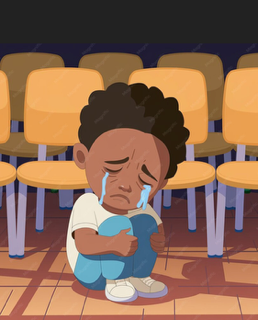
Each day, when he became overwhelmed, he would have a tantrum, and his mother would come pick him up around noon. At home, she would tell him that things needed to change, but the pattern continued.
By the time he came to work with me, there was frustration on both sides. The child felt overwhelmed and unmotivated, while the parents felt exhausted and unsure how to help.
Through hypnotherapy, we worked on relaxation, emotional regulation, and helping him understand his feelings differently.
But an important part of the solution was also creating consistent expectations at home.
His parents were encouraged to follow through with reasonable responsibilities and consequences. Instead of long arguments or repeated warnings, they focused on helping him understand:
"You are capable. We believe in you. And part of growing is learning to handle responsibilities, even when things feel difficult."

The goal was not punishment.
The goal was growth.
As he learned to stay with challenges instead of escaping them, he began developing confidence and independence.
One of the greatest lessons I have learned working with children is this:
When we help children do difficult things in a supportive way, they discover they are stronger than they thought.

The challenge itself becomes the teacher.
The child begins to replace:
"I can't do this."
with:
"This is hard, but I can learn."
That belief can change not only a child's behavior, but the way they see themselves.
What Parents Can Begin Doing Today
Understanding a child is the first step.
The next step is creating small, consistent moments that help children feel connected, capable, and supported.
You do not need to become a perfect parent overnight.
Small changes, repeated with love and patience, can create powerful results.
Here are some simple ways to begin:
1. Pause Before Reacting
When a behavior feels frustrating, try asking:
"What might my child be trying to communicate?"
A pause gives you a chance to respond with curiosity instead of reacting only to the behavior.
2. Connect Before Correcting
Before giving a lesson, a consequence, or advice, consider first creating connection.
A calm voice.
A moment of eye contact.
A reminder:
"I love you. We are going to figure this out."
A child who feels understood is often more open to guidance.
3. Help Your Child Name Their Feelings
Children cannot manage emotions they do not understand.
Help them build emotional language:
"Are you feeling disappointed?"
"Did that make you feel embarrassed?"
"Are you worried about what might happen?"
Naming emotions helps children begin understanding their own experiences.
4. Encourage Effort, Not Only Results
Children need to know they are valued for who they are, not only for achievements.
Instead of only saying:
"You got an A!"
also notice:
"I saw how much effort you put into this."
"You kept trying even when it was difficult."
Those messages build confidence and perseverance.
5. Create Opportunities for Responsibility
Children develop confidence by experiencing their own abilities.
Give them opportunities to contribute, solve problems, and complete meaningful tasks.
Responsibility sends a powerful message:
"You are capable. We trust you."
6. Remember the Power of Repair
Every relationship has difficult moments.
Parents will make mistakes.
Children will make mistakes.
What matters is what happens afterward.
A sincere apology, a loving conversation, and a willingness to reconnect can teach children that relationships can heal.
The goal is not perfection.
The goal is connection, growth, and learning together.
A Final Thought for Parents
Every child carries a story that we may not always see.
Behind anger, there may be fear.
Behind silence, there may be emotions that feel too difficult to express.
Behind frustration, there may be a child who is struggling and searching for a way to be understood.
Before we ask:
"How do we change this behavior?"
we can begin by asking:
"What is my child trying to communicate?"
That question changes the way we see children.
Children do not need perfect parents.
They need caring adults who are willing to listen, learn, repair, and reconnect.
Sometimes the greatest moments of transformation begin with something very simple:
A hug.
A loving touch.
A sincere apology.
A few minutes of truly listening.
A reminder that says:
"You matter. I believe in you. We will get through this together."
When children feel safe, they can learn.
When children feel heard, they can heal.
And when children believe in themselves, amazing things become possible.
Remember:
Children are not problems to solve. They are people to understand.
Supporting Your Child's Journey
If your child is struggling with anxiety, fears, confidence, emotional challenges, difficult transitions, or patterns that seem difficult to change, support is available.
Hypnotherapy can be one tool to help children develop relaxation skills, emotional awareness, confidence, and new ways of responding.
The goal is not to change who your child is.
The goal is to help them discover the strengths, abilities, and possibilities that have been within them all along.
Every child has a story.
Every child has potential.
And sometimes, with the right support, they simply need someone to help them see it.
After working with children for almost three decades through special education, clinical hypnotherapy, and teaching martial arts, this article is based on years of daily observation, conversations, and experiences with children and families.
It is not a theory created from a distance. It comes from witnessing, again and again, how children respond when they feel understood, supported, and guided with compassion.
Over the years, I have observed patterns: how stress affects behavior, how words influence confidence, how connection changes communication, and how children often begin to grow when they feel safe enough to believe in themselves.
My hope is that this article encourages you to look beyond the behavior and see the child who is trying to communicate. Sometimes, a small shift in understanding can become the beginning of lasting change.
And if your family is struggling and you feel you need additional support, know that you do not have to face those challenges alone. Asking for help is not a sign of failure it is often the first step toward hope, healing, and growth.
About the Author
Yoli Simons is a Clinical Hypnotherapist, former Special Education teacher, and martial arts instructor with nearly three decades of experience helping children, teens, adults, and families build confidence, resilience, and emotional well-being. Through Timpanogos Hypnotherapy, she helps clients understand the connection between the brain, emotions, and the subconscious mind to create lasting, meaningful change.
Ready to learn more or schedule a consultation?